RIDING FOR RICK
From pro racing to live music, Gears & Guitars returns with a celebration of the man who made it happen.
Dr. Richard L. Rauck was an early member of the World Institute of Pain, obtaining FIPP certification in its inaugural class in 2001, and served as WIP president from 2013 to 2015. In 2004, he founded the Carolinas Pain Institute, where he continued to mentor fellows and advance the practice of interventional pain management.
Beyond his professional accomplishments, Dr. Rauck was a civic leader and founder of the Winston-Salem Cycling Classic and the Gears & Guitars concert series, initiatives that combined international-level competition with community engagement.
Read more HERE or download the article above.
Carolina Pain Institute Physician Featured on WBT Podcast Discussing Breakthrough Migraine Research
Dr. Chris Gilmore, a leading pain physician affiliated with Carolina Pain Institute, was recently featured as a guest on CAROLINA Focus with Sharon Thorsland and Ed Billick, airing Sunday, December 14, 2025, on WBT.
During the episode, Dr. Gilmore discussed an exciting new frontier in migraine treatment-an innovative, drug-free therapy currently being evaluated in a national clinical trial for patients living with chronic migraine.
A New Approach to Chronic Migraine Relief
Dr. Gilmore is helping lead a nationwide study through Queen City Clinical Research focused on a small, implantable device placed just beneath the skin of the scalp. The device gently stimulates nerves associated with migraine pain and works continuously, offering a discreet, non-medication option for patients who have not found relief through traditional treatments.
This clinical trial targets chronic migraine, the most severe form of the condition, defined by 15 or more headache days per month. More than 3 million Americans live with chronic migraine, many of whom cycle through medications, injections, and therapies with limited success.
“This study represents a meaningful shift toward precision-based, long-term migraine management,” Dr. Gilmore shared during the discussion. “For patients who feel like they’ve tried everything, innovation like this brings renewed hope.”
Advancing Pain Care Through Research and Innovation
At Carolina Pain Institute, our physicians are committed to advancing pain care through research, clinical leadership, and patient-centered innovation. Dr. Gilmore’s involvement in this national study reflects our broader mission: expanding access to advanced treatments that improve quality of life for patients living with chronic pain conditions.
Community Health and Wellness Updates
The episode also included a seasonal health reminder shared by Ed Billick, featuring guidance from Atrium Health on ways individuals can help prevent the spread of illness during cold and flu season.
Listen to the Full Episode
To hear Dr. Gilmore’s full discussion and learn more about this groundbreaking migraine research, listen to the complete episode of CAROLINA Focus on WBT.
New Study Explores Cutting-Edge Migraine Treatment Highlighted by CPI Physician on WBT Podcast
An innovative approach to treating chronic migraine is gaining attention in Charlotte and beyond – and physicians connected to Carolina Pain Institute are helping lead the charge.
A recent article in The Charlotte Post detailed a national clinical study evaluating a novel medical device designed to reduce the frequency and severity of chronic migraines, the most debilitating form of headache disorder. Chronic migraine affects millions nationwide and is defined by 15 or more headache days per month – a life-altering burden for many patients. (The Charlotte Post)
What the Research Shows
The experimental therapy involves a small implant placed just under the skin of the scalp that gently stimulates nerves linked to migraine pain. Early results suggest this neuromodulation technique can cut monthly migraine days in half, offering meaningful relief for patients who haven’t responded to standard medical management. (The Charlotte Post )
Dr. Leo Kapural of Queen City Clinical Research – one of the study’s lead investigators – explained that while the research is still ongoing, this approach represents a promising shift in how severe migraines might be treated in the future. The Food and Drug Administration is overseeing the trial and will evaluate the therapy’s safety and effectiveness as results continue to accrue. (The Charlotte Post )
Chronic Migraine: A Local and National Challenge
Migraines aren’t just “bad headaches.” They often involve intense, throbbing pain accompanied by nausea, visual disturbances, and sensory sensitivity – symptoms that can make daily life difficult or even impossible for sufferers. Current preventive treatments don’t work for everyone, leaving many patients searching for new options. (The Charlotte Post )
The clinical trial behind this emerging therapy, registered as a multicenter, randomized, sham-controlled study, aims to test whether neuromodulation can meaningfully reduce headache days compared with a control intervention. (ClinicalTrials.gov)
Why It Matters to CPI Patients
Carolina Pain Institute is proud to support advancements like this – especially as local experts such as Dr. Chris Gilmore recently discussed similar migraine research on the CAROLINA Focus podcast with WBT. These conversations help bring national innovation to regional patients who are seeking relief.
For people living with chronic migraine in Charlotte and surrounding communities, studies like this represent hope for future therapies that go beyond medications and injections to deliver sustained relief. (The Charlotte Post)
Get Involved or Learn More
If you’re living with chronic migraine and interested in cutting-edge clinical trials or want to learn more about advanced treatment options, contact Carolina Pain Institute to explore your options. Our team stays active in research and patient care to bring the most promising therapies within reach.
New Charlotte Office
We are pleased to announce the opening of our Charlotte office! To schedule an appointment, refer a patient or to learn more about our services, contact us at 336-765-6181. Click here to download our Charlotte New Patient Referral Form.
We are excited to NOW provide exceptional care to both Winston-Salem and Charlotte communities! Our NEW Charlotte address is: 131 Providence Road, Suite 201, Charlotte, NC 28207. We look forward to seeing you soon.
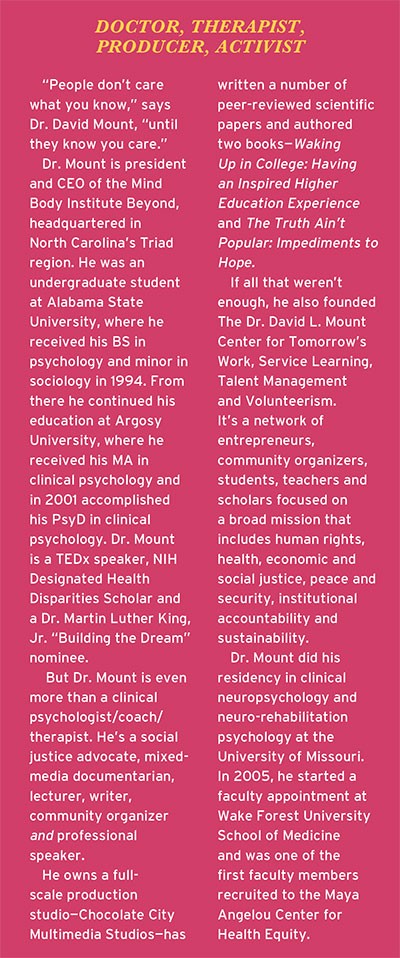
Dr. David Mount

Dr. David Mount would rather listen than talk.
It’s not that he doesn’t have plenty to say. But on a patient’s first visit, he wants to hear what led the patient to his office.
The neuropsychologist has a keen interest in the mind/body connection and a focus on how pain affects the brain. (“Pain impacts self-esteem and personal well-being,” he says. “It can cause internalized agony.”) Patients come to him with a variety of physical conditions-diabetic neuropathy, rheumatoid arthritis, pain associated with an injury or surgery-and a variety of cognitive impairments that have resulted from a physical condition.
Patients from all over the country (and the world) seek him out through his Mind Body Institute Beyond, located in Winston-Salem, North Carolina. Most patients are referred by their medical doctor when a physical malady begins to impact cognitive ability-including memory.
And while Dr. Mount’s preference is to be consulted when a physician first begins talking to a patient about cognitive impairments, he says instead he’s often brought in when the physician is running out of ideas.

A little more conversation
No matter what stage he begins with a patient, it always starts with a story. “We start with a patient-centered evaluation,” he says-with him listening as the patient talks. “I want to hear their story, uninterrupted,” he says. “I don’t want them to self-edit anything.”
Dr. Mount employs counselors and therapists at his center, but he personally sees every patient who comes in.
Patients realize the power their words carry. In Dr. Mount, they’ve found a doctor who’s willing to listen to every detail of their pain journey-all the treatments tried, the loneliness that can accompany chronic pain, the heartbreak of not always being able to keep commitments. The doctor is ready to absorb it all.
“MDs only have so much time,” he says. “I have more time to invite a storytelling approach. And patients want to talk. They may have gotten the message before to ‘shut up’ about their pain. Once they start talking in my office, it’s often hard to stop.”
Once their story has been told, he asks how they’d rewrite it. “I don’t mean how they’d rewrite it without chronic pain,” he explains. “I ask how they’d deal with the pain differently.”
Experience can be an excellent teacher. Once patients begin to consider what they would undo if they were rewriting their memoir, they can begin to take control and formulate a plan.
Dr. Mount values the work MDs have done before they bring him into the mix, but he doesn’t just thank them for the referral and move on. He uses a collaborative approach that involves the patient and the referring physician.
His goal: to help patients with cognitive impairment that’s a result of pain. Often, the impairment is a result of pain medication. Reducing a patient’s medication is often among his prescriptions. That’s accompanied by nutritional education, stretching-which is often done in his office-and other holistic treatments.
He understands what his patients are going through. He’s been there himself.
When the doctor becomes the patient
Dr. Mount suffers from chronic pain in his neck and spine. It began in 2005 when he was new to Winston-Salem and went to a chiropractor for an adjustment. After getting what he considers “substandard care,” he realized he needed to educate himself on treatment options.
“I experienced anxiety, uncertainty and was questioning myself,” he says. “My work and social life were disrupted. I know about the stigma of feeling judged. Chronic pain will wear you down.”
He was losing sleep because of the pain-and was less likely to work out, too, though sports had always been a big part of his life. He wondered, “Why me?”
He tried the gamut of specialists-neurologists, acupuncturists, massage therapists-but wasn’t having success with any of them. That led to an “aha” moment: “The system I was moving through was broken. The specialists I was going to weren’t talking to each other. The system was fragmented, and the patient was suffering as a result.”
He also understands that patients must be involved and invested in their own care-and that following doctor’s orders is imperative. “Compliance,” he says, “is the mortar that holds the bricks together.”
Noncompliance often arises, he says, from the psychological effects of pain and pain medication. So, who better than a neuropsychologist to partner with patients on sticking to their treatment plan? “I can help reinforce compliance,” Dr. Mount says. That’s something else that referring MDs appreciate about their partnership with him.
“Compliance starts with attitude,” he says. “If you can improve the attitude, then you achieve improved outcomes.”
The best medicine
Pain is serious business, but that doesn’t mean treatment has to be. Dr. Mount believes that there’s real benefit to lightening up. Part of the work he does is humor therapy. “You’ll hear a lot of laughter at my office,” he says. (Laughter? Uninterrupted storytelling? Are you getting the idea that the Mind Body Institute Beyond is not your typical doctor’s office?)
Humor is, in fact, what led to his own relief. It’s how he began to navigate the fractured system that wasn’t getting him anywhere. He still sees many of the same specialists he did back in 2005 when the pain first began-but he maneuvers the system with a different mindset now, he says. He also practices yoga and mindfulness, takes supplements and is careful about eating right and getting enough sleep.
Dr. Mount knows chronic pain is a family disease. It impacts more than the person living with the pain; it weighs on entire families. “When you talk to family members [of patients], they’ll often use similar words to describe their situation,” he says. “‘Moody,’ ‘walking on eggshells,’ ‘unpredictable.’ People with chronic pain can perceive themselves as a burden to others-and that leads to self-isolation and depression.”
Measuring how far you’ve come
As a counselor, Dr. Mount values the conversational give and take he has with patients. But as a research scientist, he also wants to measure progress. At his second meeting with a new patient-after the initial storytelling session-he’ll do an assessment of where the patient is. If the patient is having memory issues, he’ll do neuropsychological tests to discover just how much memory function has been impaired.
Physicians have been receptive to his approach. Dr. Mount will share his assessment report with the patient and the referring physician. “I’ve had doctors say: ‘When I read your report, I learn something. There are things about my patient, who I’ve been treating for 20 years, I never knew that I learned from you.'”
That’s the power of storytelling. The in-depth report combines elements of the patient’s story with Dr. Mount’s detailed findings. It’s a comprehensive look at the patient’s pain history, what’s been tried, how effective it was (or wasn’t) and what side effects may be the result of prescription medication.
It’s much more detailed than the notes a doctor typically dictates. Again, it’s because Dr. Mount and his team dedicate time to active listening.
He has seen some patients in their mid-30s who have the memory function of someone who’s 65 or older. But the good news? The situation can be reversed, he says-often by reducing the number of meds a patient is on.

Then and now
Dr. Mount’s passion for studying and treating pain began during his residency at the University of Missouri-Columbia, where he worked extensively in physical medicine, rehabilitation neurology and internal medicine. “We were seeing the adverse effects of illicit drug use on pain management,” he says. “We saw the adverse effects of comorbid chronic disease-diabetes, heart disease, physical injury-on pain management, as well.” He focused his research on the effects of physical illness on cognitive memory, attention and learning new information.
More recently, he’s been interested in further exploring the brain’s ability to recover and “rejuvenate” based on different treatment intervention strategies. His current research interest is studying and comparing pharmacological and medical device approaches.
He uses the term “chronic pain brain” to describe the fog that’s sometimes felt as a result of too much or too many pain medications. Pain brain can be as problematic as the pain itself. It can lead to memory loss, sleeplessness and a host of other issues.
And the answer, Dr. Mount believes, isn’t different or more medication. It’s less. His prescription will likely also include more laughter, more talking, more stretching and moving and more engagement with life.
When patients are ready to tell their story, Dr. Mount is all ears.
New Treatment for Low Back Pain

Wayne Cooper, a 72 year-old almost-retired attorney, lives in Marin County, California. He has suffered from low back pain and sciatica for nearly 20 years, keeping him from enjoying many activities and requiring daily medication. The Bay Area is hilly-and due to his back pain Cooper could only walk short distances and had to avoid inclines. He and his wife enjoyed bird watching, but those outings were also kept short to minimize pain. Even water aerobics had to be cut back.
Cooper tried many treatments and saw many specialists to relieve his pain. He regularly took 800 mg of ibuprofen several times a day. Smaller doses had no impact. When things got really bad, he would take hydromorphone. Over the years, Cooper had several epidurals and steroid shots, and made periodic attempts at yoga. Nothing brought relief from the pain. When the pain was severe, it would immobilize him. It could take hours or a day to reduce the pain from a 10 to a 6.
Cooper’s L4, L5 and S1 were in bad shape in part due to his upper spinal scoliosis, but because of the competing issues between his upper and lower back, specialists decided he was a good candidate for surgery. A new procedure called SPRINT PNS was suggested as an option because it was minimally invasive and typically offers long-lasting relief. Cooper saw no downside except that he would not be able to use the pool while the device was in place.
“I was told it could take a couple of weeks before I felt any difference,” Cooper says, “but I was pain free within a day!”
During the 60-day SPRINT therapy period, Cooper took neither ibuprofen nor any other medications for back or sciatic pain. The device was removed about six weeks later, and he has continued to experience relief from back and sciatic pain for three weeks and counting.
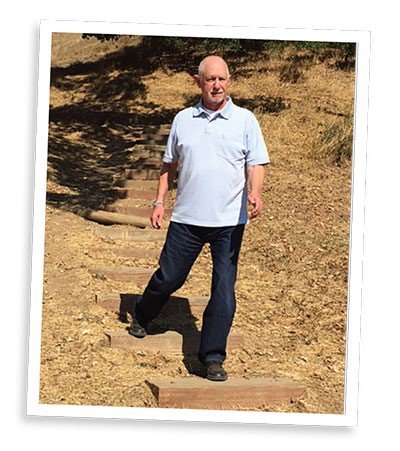
He says is now more active. After the SPRINT PNS was installed, he was able to take a hike of more than three hours with his wife and friends, including ascending a twisty, uphill trail. He likes to joke that the hike ended because the trail did, not because of pain. He’s able to go for longer bird-watching walks with his wife. Water aerobics sessions are pain-free and back on his calendar. Even cooking, which was impacted prior to SPRINT, is now more enjoyable, since uninterrupted standing also used to trigger his hip pain.
“I would absolutely recommend SPRINT,” Cooper says.

TO LEARN MORE ABOUT SPRINT VISIT: SPRTHERAPEUTICS.COM
Automatic Thoughts and Pain
by Dee Emmerson, TCC Writer
Kevin hurts all the time since his accident. After learning how thoughts become automatic, he’s noticing that his pain gets worse with certain ways of thinking. Because this surprises and baffles him, he’s trying to pay attention to the relationship between his thoughts and his pain.
So far he’s identified several instances that result in a pain flare:
- When he dreads an upcoming situation.
- When he gets down on himself-for not doing enough or for handling a situation poorly.
- When he feels like a victim-if someone can’t fix his pain or doesn’t do what he promises.
Dr. Buenaver, a researcher at Johns Hopkins, believes we can reduce our pain when we understand the relationship between thinking, feelings, and behaviors. “It may sound simple, but you can change the way you feel by changing the way you think,” he says. (click to read)
Many of us with chronic pain hurt the worst when we’re upset or fearful, and Kevin is beginning to connect some of his thought patterns to negative filters. During a recent phone call with his case manager, his fears boiled up and quickly turned into: I can’t go back to work until the doctor releases me…what if I don’t get better?…I’ll lose my job…I won’t be able to pay the mortgage or car payment…I’ll lose everything!…What if my wife decides I’m not worth the trouble?… His pain skyrocketed in a matter of seconds.
With a smile in his voice, Kevin proudly relates how he stopped that freight train. “The fear blinded me for a minute, and then I realized this was how catastrophizing works. I thought back to what started it-a simple statement by my case worker that I would need a doctor’s release before I could return to work. I slowed down and decided to ask when I could get an appointment so the doctor could sign off on my progress, and my pain level dropped about 3 levels!”
We all have ways of thinking that impede our progress. Do you recognize any of these and how they make you feel?
Negative mental filter
How it looks: Filtering every activity/thought through something that bothers me.
Thinking: My pain was bad today, so learning pain management isn’t helping.
Feelings: I feel let down, hopeless, cynical.
Catastrophizing
How it looks: Exaggerating the consequences (it’s the worst that could happen).
Thinking: My spouse is so tired of my pain that he will probably leave me…I will be destitute…I will have to raise the kids alone…I will die alone.
Feelings: I feel fearful, worried, tense, anxious.
“Should” statements
How it looks: Trying to motivate ourselves or directing at others.
Thinking: I should have gotten more done today. Or… I should have known you’d forget to call me.
Feelings: I feel guilty, pressured, disappointed.
Arguing with reality
How it looks: Focusing on not wanting something to be what it really is.
Thinking: If I didn’t have pain, I would be happy.
Feelings: I feel disappointed, sad, hopeless.
Filtering
How it looks: Ruminating excessively on the negative part of a situation or disqualifying the good aspects of something.
Thinking: Even though I forgot about my pain while the kids were opening their presents, my life is still all about the pain.
Feelings: I feel cynical, doubtful, hopeless.
If you live with pain, a Coach can help you discover strategies to manage or reduce your pain …read more. Or, Coaching may be the perfect avocation for you to help others. TCC®U trains coaches and prepares students for national certification…read more.
*Names have been changed.
Have PainPathways delivered to your door.
SUBSCRIBE HEREClick here for more Wellness articles.
CLICK HERELetting Others Down: Living with Lupus
I’m overly conscientious. Some might think this is a good trait, particularly when they happen to be on the receiving end of my hyper-conscientiousness. I will always arrive on time (or early and sit in my car and wait until the appointed time), deliver whatever it is I promised you, return your calls, and you can count on me always to do what I tell you I’m going to do. Sounds great, right?
Here’s the flip side: If I’m not careful, Miss Conscientious’s evil stepsisters-Inflexibility and Guilt- sneak into the picture. I do try to remain relatively flexible in life and not hold others to my own high standards, but I struggle with guilt. Over the years, I’ve learned that my lupus has a bit of a twisted sense of humor. First, she lets me commit to things, knowing just how conscientious I am. Then, when the day or appointed time comes to follow through on whatever is planned, she steps in with her wicked little laugh and says, “Not so fast, Miss Cindy. I think today will be a pajamas-all-day day.” And out the window my plans fly, hitting Guilt as she makes her way in when I have to call people and tell them that I won’t be able to do what I promised.
I realize this isn’t rational. In my head, I know that people understand when I am sick and can’t show up, just as I understand when the same thing happens to them. But I don’t like it. No matter how much I try to sugarcoat it, letting other people down just feels crummy to me. This unpredictability is one of the things that make living with chronic illness so challenging. And it is compounded by the fact that the disease is invisible, because often on the outside we look fine and like we should be able to do what we promised.
This presents a huge dilemma. Do I regret invitations and not accept responsibilities because I might not feel up to them when the day arrives, or do I accept and then cancel if I don’t feel well? I am sure there are millions of others struggling with this decision as I write. It is especially important because if we start to regret everything, we can become lonely and negative things start to snowball. That’s when I begin to feel that lupus has Cindy, not that Cindy has lupus. And, for me, I refuse to let this happen. I refuse to let lupus run (or ruin!) my life.
So, here’s what I’ve decided: I plan to keep being actively engaged in life, especially with people who know and love me. I’ll make the plans, I’ll accept the responsibilities and will do my very best to do what I promise. But, and this is a big but, my health does come first. If a pajamas-all-day day happens to hit on a day I have plans, I might have to reschedule. And you know what I’ve learned? Life does go on without me (hard lesson to my conscientious little soul) and it is a whole lot more fun being with me when I feel well. I’m leaving Guilt behind and bringing Smile and Humor to the party!
About Cindy Coney: Ambassador of hope and author of The Wild Woman’s Guide to Living with Chronic Illness, Cindy Coney is a nationally acclaimed speaker, trainer, human resilience expert, and philanthropic force. Dedicated to helping both children and adults achieve optimal health and success, Cindy has taught thousands of people to move beyond coping with limitations to recapturing joy and fulfillment in their lives.
Diagnosed with lupus in 1980, Cindy has since driven a race car 124 miles per hour; completed the Chicago Marathon; championed countless nonprofit organizations; presented to the World Lupus Congress as a keynote speaker; and shared her inspiring, empowering story from Belize to Baltimore.
Follow Cindy’s Blog at www.cindyconey.com
Have PainPathways delivered to your door.
SUBSCRIBE HEREClick here for more Wellness articles.
CLICK HEREIf you’ve been feeling like your doctor visits aren’t doing much to help your low back pain, there’s now some research to back you up. The health journal, The Lancet, recently published a series of articles looking at how we treat back pain, and the gist of their findings is that most of us who go to a doctor for an aching back are probably receiving inappropriate or unnecessary treatment. According to the researchers, the most common missteps by doctors include over-reliance on medications including opioids, pushing bedrest and avoidance of activity, emphasizing tests like x-rays and MRIs too quickly, and depending too much on invasive treatments like injections and surgeries. So, what should doctors be suggesting instead? The authors offer these evidence-based recommendations: more education about pain management, resuming of normal activities, exercise, and “psychological programs for those with persistent symptoms.” My guess is that this last recommendation – that we need more in the way of psychological treatments for low back pain – caught you by surprise.
Though back pain is a physical problem – there is tissue inflammation and irritation that needs to be treated – it’s actually better viewed as an experience, and one that can encompass a vast array of elements including emotional and psychological factors. On any given day, the emotional reactions that are generated in connection to our pain, along with the thoughts, attitudes, and judgements that arise, all contribute in important ways to our low back pain experience.
The way bodily pain gets processed in our brains is strongly linked to the same circuits that handle thoughts and feelings. For example, the onset of low back pain can trigger a stress cascade leading to feelings of fear, anxiety, worry, irritability, or depression. High levels of psychological distress, along with catastrophizing, where we can only see the worst in a situation, have been tied to a higher chance that pain will become ongoing. Ignoring these types of factors only leads to more suffering and poor outcomes.
So, what can be done psychologically to help improve the situation?
Anything that can help improve your outlook and diffuse an over-agitated nervous system can be helpful, but there are some specific psychological approaches worth looking into:
- Pain Psychology – Several sessions with a psychologist or therapist who specializes in pain management can help you learn useful tools and strategies. Cognitive-behavioral therapy is a well-established form of psychotherapy that focuses on reprocessing dysfunctional thought patterns to decrease emotional distress. Another promising psychological approach used in the treatment of pain is Acceptance and Commitment Therapy (ACT) which promotes improving psychological flexibility as a way of overcoming health challenges.
- Mindfulness – Mindfulness works on activating brain relaxation pathways as a tool to relieve pain and reduce stress and anxiety. Some studies have shown that practicing mindfulness can improve pain and well-being for patients with conditions like chronic low back pain. Mindfulness-based stress reduction (MBSR) is a structured 8-week program geared to teach useful mindfulness-based techniques, and these courses can now be found in many communities.
- Progressive Muscle Relaxation – Muscles that surround and support the spine and pelvis often tense up as a protective mechanism after a back injury, but when that tensing continues and doesn’t let up, it can lead to more pain and problems with mobility. Learning tools and techniques to relax these over-activated muscle groups can reduce discomfort and improve function.
- Multidisciplinary Programs – Combining psychological treatments and education with exercise and movement can be an effective way to treat challenging back problems. In my own practice, we offer something known as a functional restoration program which is a structured 6-week, 6-hour/day program that combines psychology classes with exercise and other modalities. A more comprehensive approach has the advantage of working on all aspects of the pain experience in a coordinated way.
Unfortunately, in many communities these types of recommended treatments are often not available or not covered by insurance. If you are having trouble finding local resources, consider looking into telemedicine for an on-line therapist or check out apps geared toward relaxation training and meditation. And don’t forget that emotional well-being can get a boost in many other ways including exercise, social bonding, listening to music, yoga, tai chi, and just getting more fresh air.
Peter Abaci, MD, is one of the world’s leading experts on pain. He is the author of Take Charge of Your Chronic Pain: The Latest Research, Cutting-Edge Tools, and Alternative Treatments for Feeling Better , host of Health Revolution Radio, and a regular contributor to WebMD, The Huffington Post, and PainReliefRevolution.com. His newly released second book, Conquer Your Chronic Pain, A Life-Changing Drug-Free Approach for Relief, Recovery, and Restoration, is already considered a must read for anyone dealing with chronic pain. As the Medical Director and Co-Founder of the renowned Bay Area Pain and Wellness Center his innovative strategies for integrative pain treatment have helped restore the lives of thousands struggling with pain. Dr. Abaci’s publications on pain treatment have become a trusted resource for patients, family members, doctors, psychologists, physical therapists, and insurance companies, alike. He resides with his family in Los Gatos, California.
Aromatherapy and Its Use in Chronic Pain
by Blaire Morriss, ANP-BC, RN
If you’ve ever smelled lavender and felt calmed, or had the perfume of a freshly peeled orange brighten a moment, you’ve directly experienced the powerful effects of scent. Aromatherapy, the therapeutic use of essential oils, has experienced renewed popularity in recent years as a tool on the journey of health and wellness. While many people are familiar with aromatherapy as something that smells good, the therapeutic effects of essential oils make aromatherapy much more than just a scent. In this article we explore aromatherapy as another tool in the chronic pain toolbox.
A quick search of “aromatherapy and pain” on PubMed will return pages dedicated to trials studying the effects of aromatherapy on pain . An expert in the field, Dr. Jane Buckle, cites several factors that may be behind the pain-moderating effects of scent: the effect of essential oils on the brain, analgesic (pain-relieving) components in essential oils, and the relaxant effect aromatherapy has on the nervous system (Buckle, 2003). In essence, aromatherapy has the potential to affect us not only through our mind and emotions but also through our body. An example of this is aromatherapeutic massage, which can initiate a deep relaxation effect that not only influences pain perception, but also has the potential to improve mood.
Traditionally a number of essential oils have been used for their analgesic effect. Some essential oils thought to be helpful in both acute and chronic pain include:
Lavender (Lavendula angustifolia) Traditional use: analgesic and antispasmodic. Studied in small clinical trials for its calming and sedating activity and ability to reduce the perception of pain when inhaled.
Peppermint (Mentha piperita) Traditional use: analgesic and antispasmodic. Studied in clinical trials for its analgesic effect on headache and ability to reduce colon spasm.
Ginger (Zingiber officinale) Traditional use: analgesic and anti-inflammatory. Studied in small clinical trials for its ability to reduce pain in arthritis and knee pain.
Marjoram (Origanum majorana) Traditional use: analgesic and antispasmodic. Shown in small clinical trials (when used in an essential oil blend) to produce an analgesic effect in low back pain and arthritis.
Geranium (Pelargonium graveolens) Traditional use: antispasmodic and for stress-related conditions. Shown in clinical trial to produce a significant reduction in neuropathic pain.
Clary Sage (Salvia sclaria) Traditional use: antispasmodic and relaxant. Shown in small clinical trials (when used in an essential oil blend) to reduce pain.
Black Pepper (Piper nigrum) Traditional use: antispasmodic and relaxant. Shown in small clinical trials to decrease arthritis pain.
Lemongrass (Cymbopogan citrates) Traditional use: analgesic. Thought to help with muscle pain.
Roman Chamomile (Chamaemelum nobile) Traditional use: anti-spasmodic, analgesic, and relaxant.
Essential oils can be used in many ways, but topical application and inhalation are generally the most effective for chronic pain. For specific pain complaints such as an achy knee or sore muscles, topical applications (applying directly to skin) of essential oils may be most beneficial. Essential oils can also be applied topically by adding them to massage oil or body lotion, dispersing in an aromatic bath, or adding to a warm or cool compress.
Inhalation is an effective method for affecting both the physical and psychological realms-by sniffing a bottle of oil, adding a drop to a cotton ball and inhaling, using a specialized aromatic inhaler (aromastick), or inhaling the steam from a bowl of hot water after adding a couple of drops of essential oil.
The majority of essential oils are safe and do not have adverse effects when inhaled or diluted and used topically. One of the great benefits of essential oils are their relatively low risk of harm and high potential for benefit. Despite this fact, if you have hypertension, seizures, sensitive skin or are taking multiple medications, it is advisable to discuss using essential oils with a knowledgeable healthcare provider prior to use.
Recipes:
Sore Muscle Blend (Results in a 5% dilution)
1 oz Organic Sweet Almond Oil 12 drops Lavender (Lavendula angustifolia) 10 drops Marjoram (Origanum majorana) 8 drops Lemongrass (Cymbopogan citratus)
Shake well and apply up to three times daily to sore muscles. Wash hands well after use
Uplifting Spritzer (Makes a spritzer with a 2-3% dilution)
In a 1 oz metal or glass spritzer bottle add: 1 oz distilled or purified Water 12-18 drops Bergamot (Citrus Bergamia) -or- Grapefruit (Citrus paridisii)
Spray in room as needed. Avoid spraying on furniture as essential oils can discolor wood and fabrics. If sprayed on body avoid direct sunlight for 12 hours.
Blaire Morriss is a Nurse Practitioner at the Vanderbilt Center for Integrative Health and an Instructor in Clinical Nursing at the Vanderbilt University School of Nursing. Blaire has completed two certification programs in Aromatherapy and has been working with essential oils for the past 15 years. She received her graduate degree in nursing from Vanderbilt University and completed the Fellowship in Integrative Medicine at the University of Arizona in 2012. Blaire is also a Certified Professional Health Coach.
Take Courage Coaching® coaches those who live with complicated pain to utilize tools and strategies that reduce stress, anxiety and pain. You can become part of this health and wellness community-as a client or coach. http://www.takecouragecoaching.com